
Epoxides
Ethylene oxide and propylene oxide are examples studied for carcinogenic potential.
Understanding how certain chemicals, environmental exposures and everyday habits may influence cancer risk.
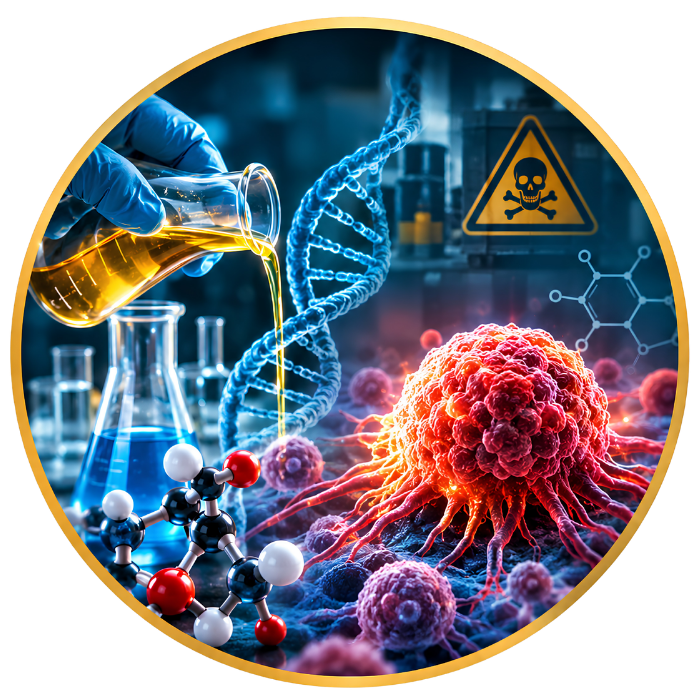
Chemical carcinogenesis refers to the process in which exposure to certain chemical substances can contribute to cancer development. The risk depends on the chemical, dose, duration and route of exposure.
Some are established carcinogens, while others remain under scientific investigation.
Ethylene oxide and propylene oxide are examples studied for carcinogenic potential.
Examples include vinyl chloride, carbon tetrachloride, chloroform and related compounds.
Hydrazine and certain hydrazine compounds have been investigated for carcinogenic effects.
Certain N-nitroso compounds are important subjects in cancer and toxicology research.
Benzidine, aniline and related aromatic amines belong to this important chemical group.
Benzene, benzo[a]pyrene and related hydrocarbons have been extensively studied in cancer research.
Some chemicals and solvents can pass through the skin, particularly with repeated or prolonged contact.
Harmful substances can enter the body when contaminated food, water or other materials are swallowed.
Breathing fumes, gases, vapours or airborne particles can be an important route of occupational exposure.
Some chemicals are metabolically activated and can produce reactive intermediates.
Reactive substances may interact with DNA or influence cellular regulatory mechanisms.
Some carcinogens can form DNA adducts, potentially interfering with normal cellular processes.
Accumulated genetic or epigenetic changes can contribute to abnormal cell growth over time.
Not every exposure causes cancer. Risk depends on the specific substance, level and duration of exposure.
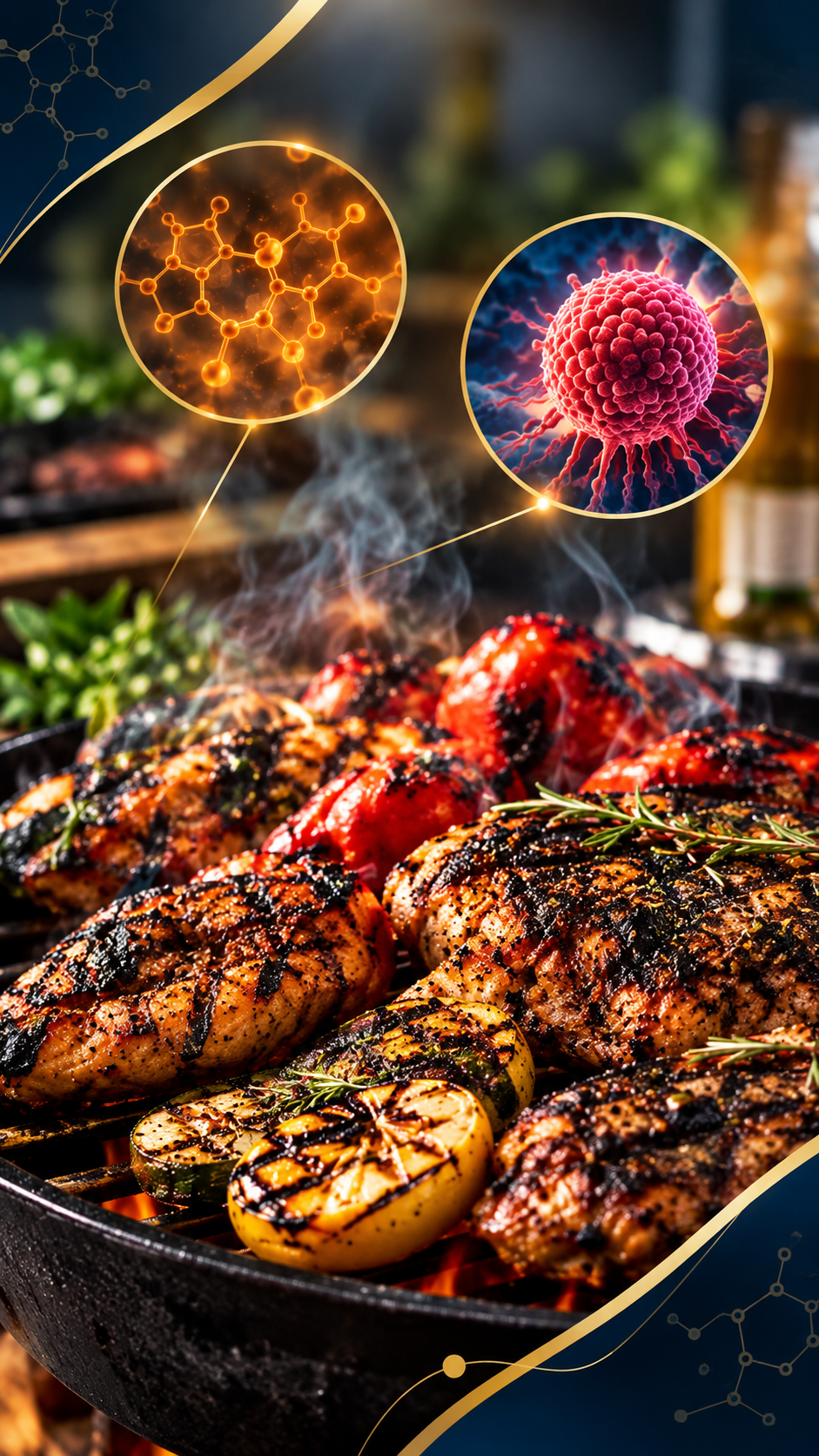 01
01
Very high-temperature cooking and heavy charring can generate compounds of health concern. Avoid repeatedly eating heavily charred food.
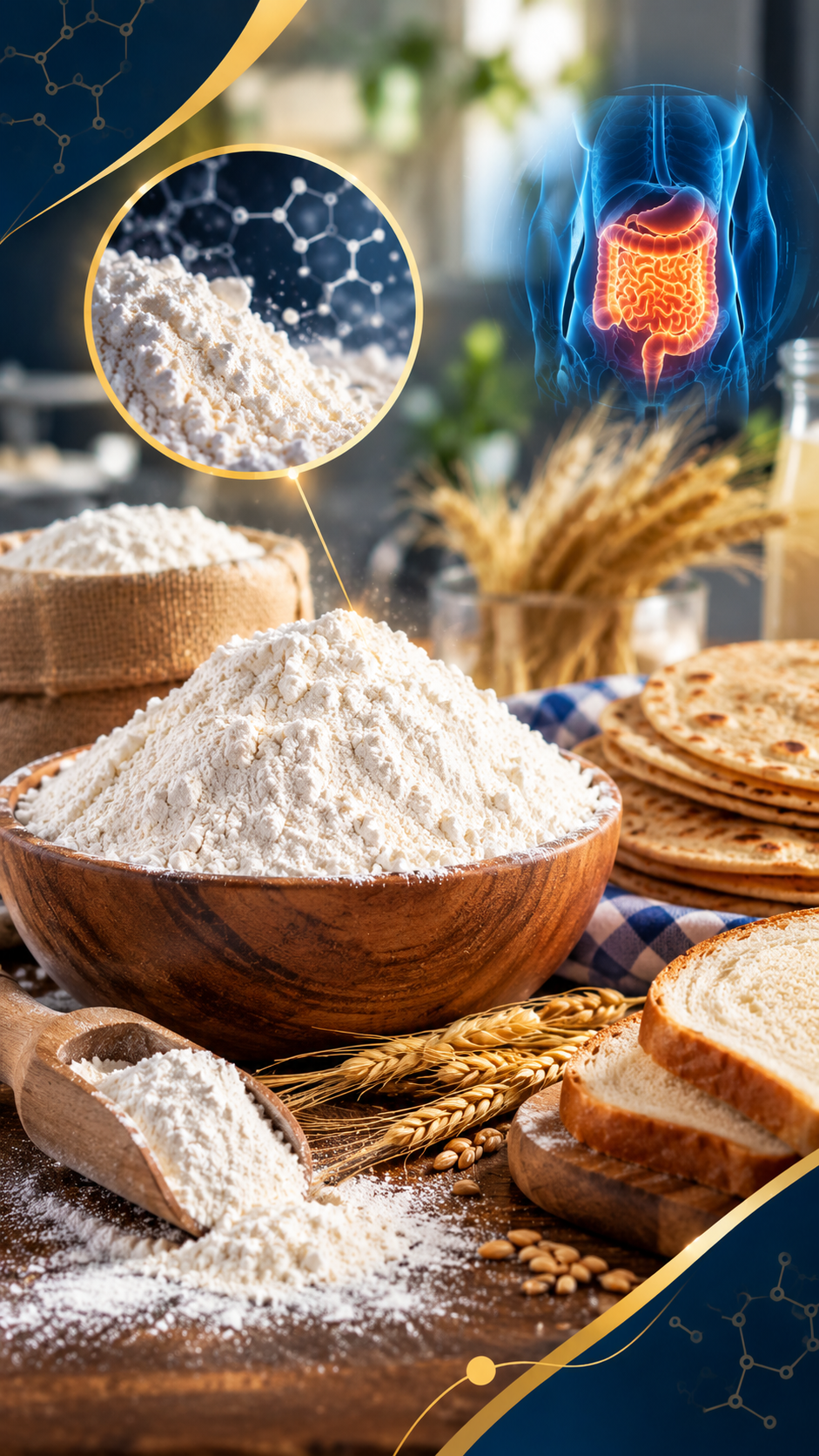 02
02
Refined flour is not itself established as a chemical carcinogen. However, diets high in refined carbohydrates may be nutritionally less favourable when consumed excessively.
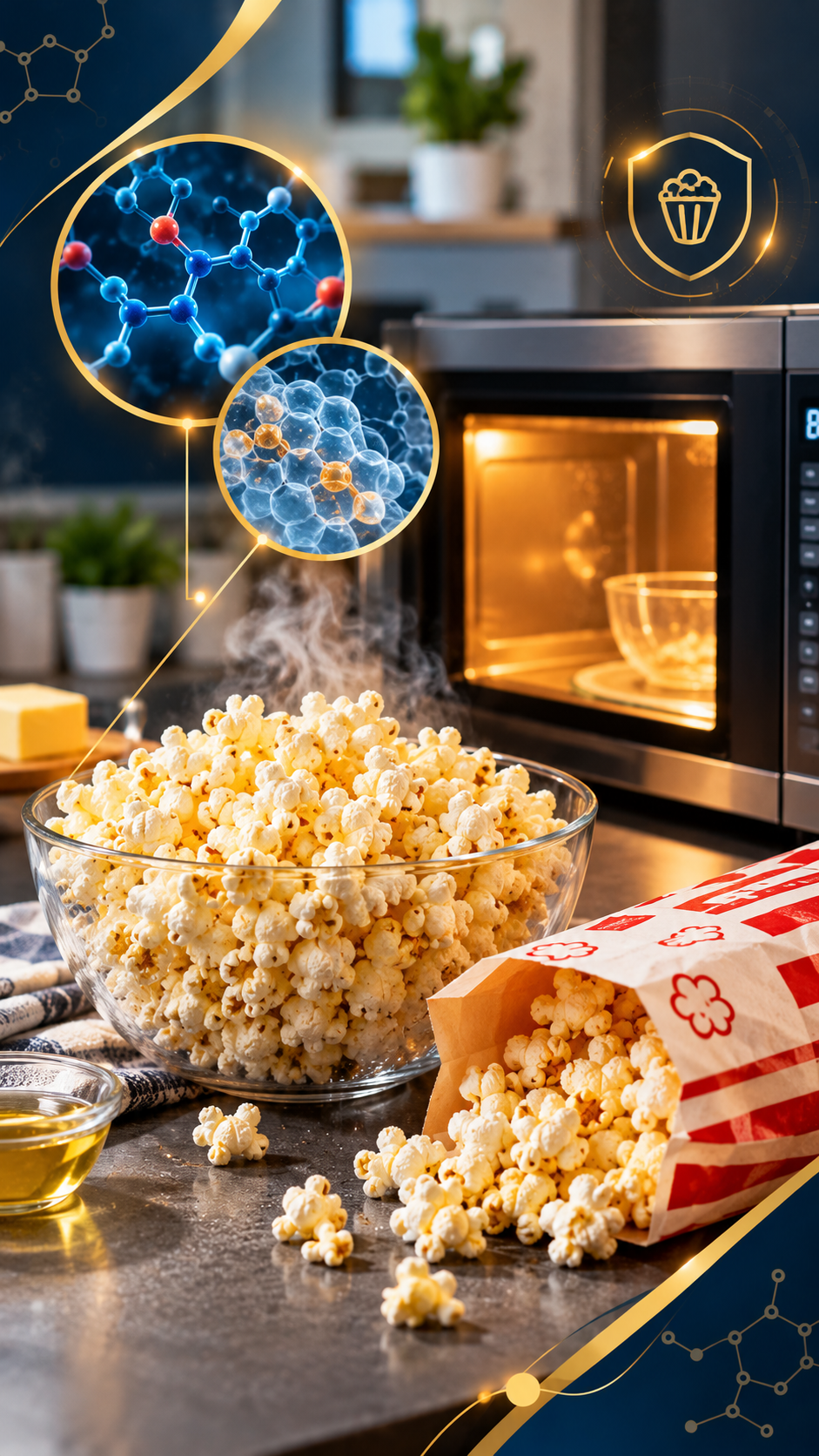 03
03
Some food-packaging chemicals have been studied for possible health effects. Regulations and formulations can change over time, so packaging safety should be evaluated using current evidence.
 04
04
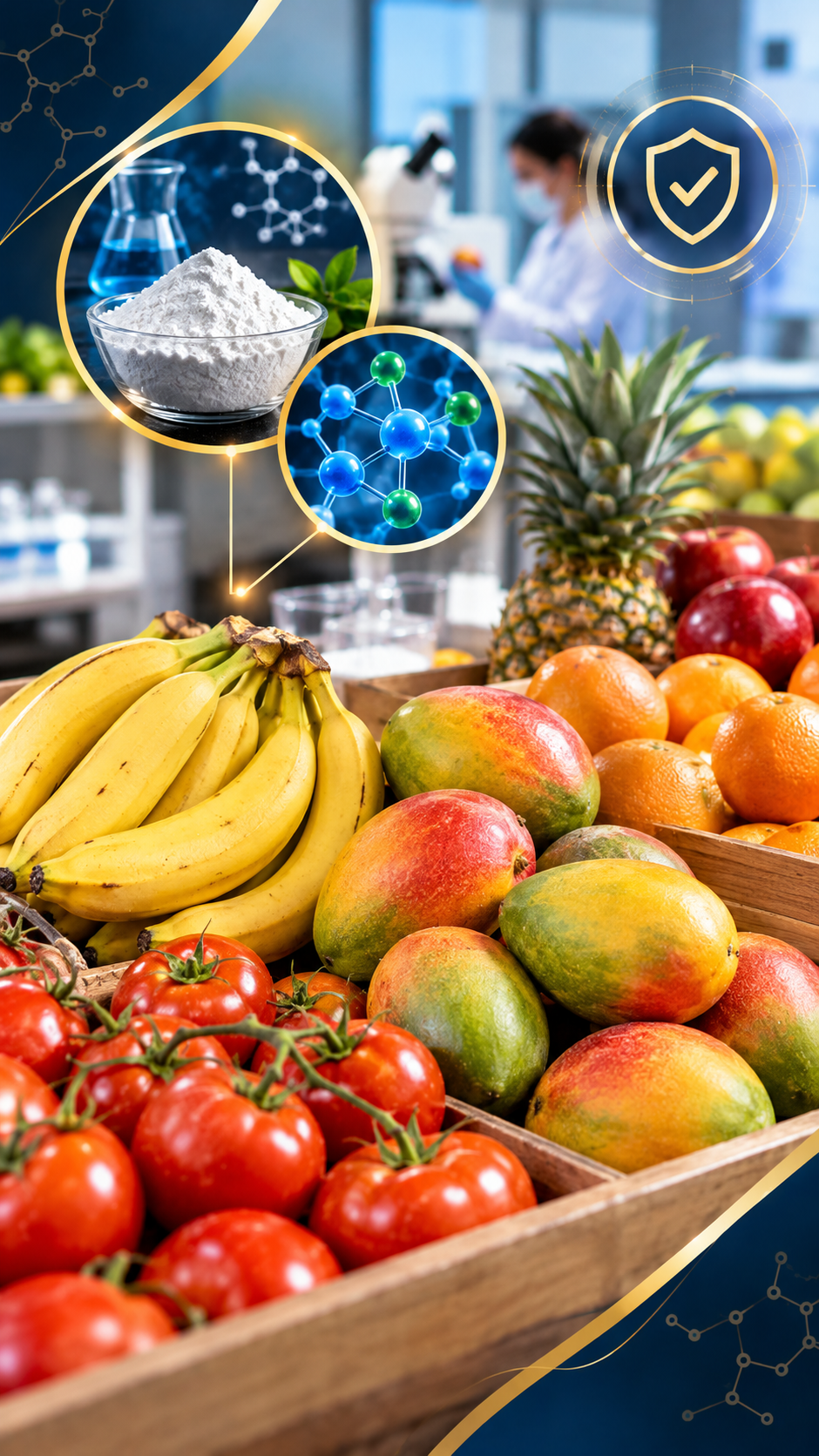
Food safety regulations restrict the use of unsafe ripening practices. Fruits should be sourced from reliable suppliers and handled according to food-safety standards.
Some specific pesticides or pesticide-related chemicals have been classified as carcinogenic by international scientific agencies. However, this does not mean that every pesticide exposure causes cancer.
Specific chemical matters
Dose and duration matter
Route of exposure matters
Reducing unnecessary exposure is a practical part of a healthy lifestyle.
Prefer glass, stainless steel or other appropriate food-safe containers, especially for hot food and drinks.
Wash fruits and vegetables thoroughly under clean running water before eating.
Avoid repeatedly consuming heavily burnt or charred foods.
Do not rely on viral claims about cancer-causing foods or chemicals without checking reliable scientific sources.
Environmental and chemical exposures can contribute to cancer risk, but individual risk is influenced by many factors. Awareness, prevention and evidence-based choices matter.
MD, DM (Medical Oncology), MRCP SCE (Medical Oncology), ECMO, PDCR